
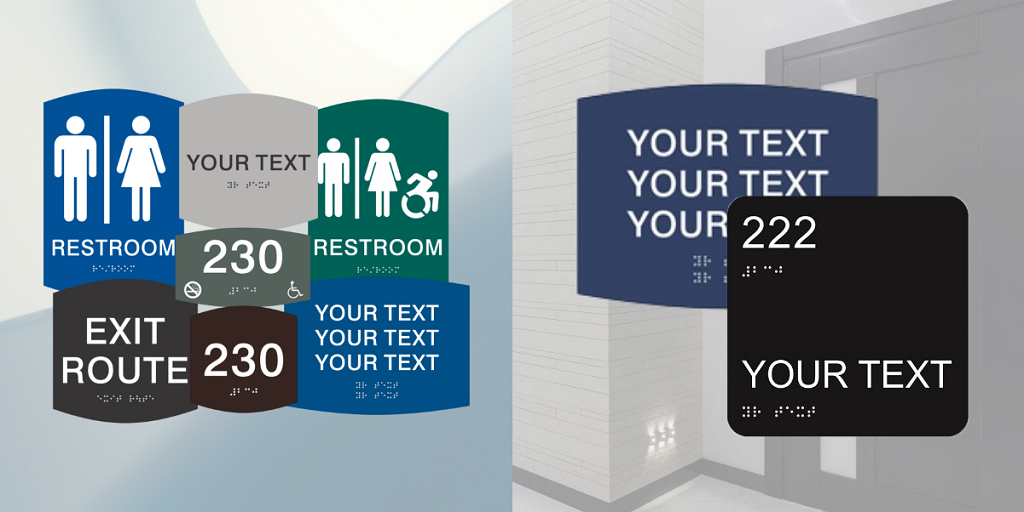
Many business owners prepare for legal risks tied to contracts, insurance, or operations, but overlook signage until a complaint appears. Accessibility lawsuits remain active, especially in California, which recorded nearly 6,000 federal ADA filings in 2021 and ranked among the highest alongside New York and Florida between 2013 and 2021.
Business owners in Los Angeles County have raised concerns about the cost of correcting violations they viewed as minor, and some reported California cases have involved repeat accessibility complaints tied to signage issues. Reviewing custom Braille signs and accessibility requirements early helps businesses catch problems sooner and avoid expensive corrections later.
Why Signage Often Ends Up Under Review
Accessibility complaints rarely focus on one isolated issue.
Inspectors and complaints often assess how a building functions as a whole, including entrances, exits, room identification, navigation, and emergency information. Signage appears repeatedly because people interact with it every day.
Problems often involve details that seem small during installation:
- Missing tactile features
- Incorrect mounting locations
- Outdated room labels after renovations
- Poor contrast or finish selection
- Signs that do not align with current braille regulations
Businesses that review ADA-compliant signage early often avoid costly replacement work later.
Exit and Safety Signs Deserve More Attention Than Most Owners Give Them
Exit signs receive closer attention because they affect both accessibility and safety. Businesses should review tactile exit signs, fire safety Braille signs, and emergency egress signs to ensure they meet current requirements and remain easy to identify.
This becomes especially important in offices, healthcare facilities, hotels, schools, and other commercial buildings where people move through the space throughout the day. Reviewing signage early usually creates fewer corrections later.
Why Businesses Choose Custom Instead of Generic
Generic signs may look convenient at the ordering stage, but often create limitations once installation begins.
Buildings vary in layout, occupancy, branding requirements, wall conditions, and circulation patterns. A hospitality property may require a different identification system than a medical office or multi-tenant commercial space.
That flexibility explains why many businesses choose custom Braille signs.
Custom fabrication allows teams to coordinate dimensions, finishes, placement requirements, tactile specifications, and visual consistency across the entire property. Owners can maintain branding standards while meeting accessibility expectations.
Custom solutions also make future updates easier during renovations and expansions.
Better Wayfinding Creates Better Daily Operations
Businesses that invest in accessible wayfinding often reduce preventable problems across daily operations because people can locate exits, rooms, restrooms, and shared spaces without relying on staff assistance. Consistent public building signage also helps properties maintain clearer traffic flow, meet accessibility expectations, and reduce confusion during inspections, renovations, and emergencies.
When entrances, exits, room identification, and common areas use a single signage system, businesses create a more organized environment and reduce the risk of overlooking accessibility details that later require correction.
Small Details Become Expensive Faster Than Owners Expect
Many accessibility issues surface only after opening, when customers are already using the space and operations are fully underway.
At that point, owners often pay for replacement fabrication, labor, compliance reviews, legal consultation, and operational delays over issues they could have corrected earlier.
Business owners looking to reduce exposure often review signage during construction, renovations, annual audits, and expansion planning.
For businesses operating in California and especially across L.A. County, custom Braille signs continue becoming a practical investment because they support compliance, improve navigation, and help prevent expensive corrections tied to signage requirements.
Businesses looking to build accessible spaces and maintain consistency across their properties can explore a complete line of ADA-compliant custom Braille signs, tactile signage, and identification solutions through Braille Sign Pros.
For More Information About Ada Room Number Signs and Stairwell Signs Please Visit: Braille Sign Pros LLC.