
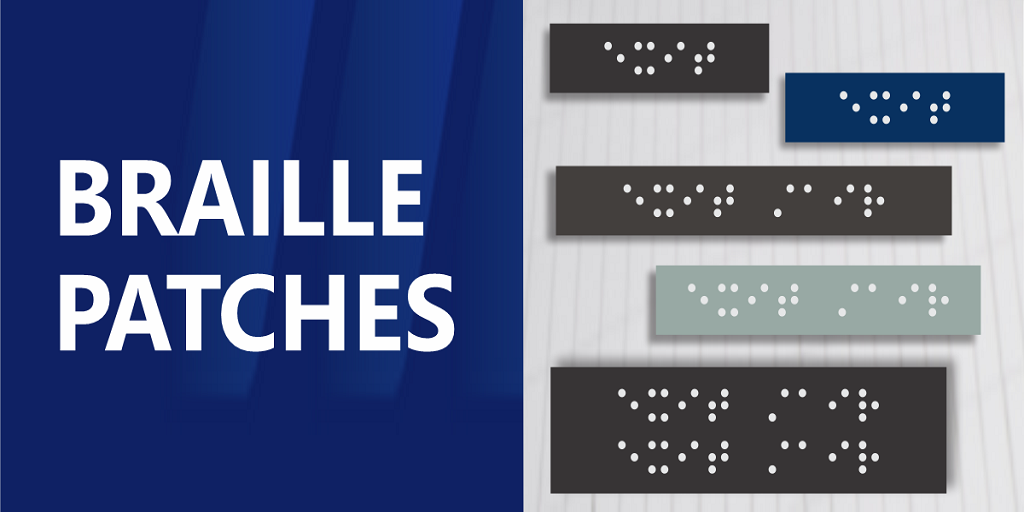
Properly placed Braille labels are a critical part of how people with visual impairments navigate public spaces safely and independently. When signage is installed at the correct height and in a consistent location, it creates a reliable system that users can trust. Without that consistency, even well-designed signs lose their value because people cannot find or read them efficiently. But where is the right placement?
The Right Place for Braille
Height plays a central role in usability. Tactile signs are meant to be read by touch, which means they must fall within a comfortable reach range for most users, including those in wheelchairs. If a sign is placed too high, it becomes inaccessible. Place it too low you risk people missing it entirely or moving awkwardly to find it. Accessibility standards define a vertical range that keeps tactile text within reach and ensures that users can approach, locate, and read the sign without strain. This consistency reduces guesswork and helps users move confidently through a space.
Braille Labels on Doors
Signs are typically positioned on the latch side of a door, where people naturally reach when entering a room. This placement aligns with how individuals interact with doorways, making the sign easier to locate without searching for it. It also improves safety, because a person relying on touch could be put at risk of being struck by a moving door or becoming disoriented. Keeping signage close to the door, but not obstructed by it, ensures both accessibility and safety.
ADA Compliance is a Must
The ADA requires specific measurements that ensure signs are positioned consistently across different buildings. The ADA offers guidelines that define how far a sign should be from the door frame and where the tactile text should sit within a set vertical range. This standardizes these measurements, so users can rely on a predictable pattern. For example, when approaching any doorway, they know where to reach.
Braille and tactile signage are not optional in many public and commercial buildings. These signs are required to identify key spaces such as restrooms, exits, and accessible facilities. They also provide direction when an entrance or amenity is not accessible, guiding users to the nearest suitable option. These requirements exist because access to information is a fundamental part of accessibility. Without clear, readable signage, even a physically accessible space can become difficult or impossible to use.
Also, not all walls or surfaces are ideal for mounting, and sometimes adjustments are needed to maintain proper height and placement. In those cases, solutions must still follow accessibility principles. The goal is always to keep the sign close enough to its associated space while ensuring it remains easy to find and safe to approach. Even when conditions are challenging, the priority remains usability.
Accessibility is Possible with Braille and Tactile Signs
Accessibility has become a central focus in modern design because public spaces are meant to serve everyone. This shift reflects a broader understanding that inclusion is not just about compliance but about dignity and independence. Clear signage, logical placement, and thoughtful design improve navigation for all users, including visitors, children, and older adults.
With Braille Sign Pros, placing Braille labels is about more than meeting a requirement. It is about creating environments where people can move freely, find what they need, and feel confident doing so. Thoughtful positioning ensures that signage fulfills its purpose, turning access into a practical, everyday reality rather than an afterthought.